IDBI Bank JAM (Junior Assistant Manager) 2026 — fresh graduates के लिए सबसे अच्छा banking officer entry: 1,100 JAM + 200 AM = 1,300 पद, in-hand salary ₹45,000–₹52,000 (JAM) और ₹58,000–₹68,000 (AM)। LIC की majority ownership के कारण job security बेहतरीन। CBT में कोई sectional time limit नहीं — 90 मिनट में सभी 150 प्रश्न freely attempt कर सकते हैं। यही सबसे बड़ा strategic advantage है।
CBT परीक्षा पैटर्न
| Section | प्रश्न | अंक | अनुशंसित समय |
|---|
| Reasoning Ability | 35 | 35 | 25 मिनट |
| Quantitative Aptitude | 35 | 35 | 25 मिनट |
| General / Economy Awareness | 30 | 30 | 20 मिनट |
| English Language | 30 | 30 | 15 मिनट |
| Computer Knowledge | 20 | 20 | 5 मिनट |
| कुल | 150 | 150 | 90 मिनट |
✅ No Sectional Time Limit — बड़ा Strategic Advantage:
सभी 5 sections के बीच freely move कर सकते हैं। अनुशंसित क्रम: Computer Knowledge पहले (20Q, 5 min — pure recall), फिर Economy Awareness (20 min), फिर Reasoning (25 min), फिर Quant (25 min), अंत में English (15 min)। अपनी strongest section से शुरू करें।
IDBI Bank — Institution-Specific Facts
| IDBI Topic | मुख्य तथ्य |
|---|
| पूरा नाम | Industrial Development Bank of India |
| स्थापना | 1964 में Development Finance Institution (DFI) के रूप में; 1976 में independent statutory body |
| Commercial Bank में परिवर्तन | 2004 में IDBI Act 2003 के तहत full-service commercial bank बना |
| LIC अधिग्रहण | LIC (Life Insurance Corporation) ने January 2019 में 51% stake लिया; LIC + Govt मिलकर ≈94.7% hold करते हैं |
| RBI वर्गीकरण | "Private Sector Bank" — भले ही LIC/Govt majority ownership हो — unique classification |
| मुख्यालय | मुंबई, महाराष्ट्र |
| Strategic Disinvestment | Govt अपना stake घटाने की योजना बना रही है (2022 से pipeline में) |
Economy Awareness — High-Value Topics
| Economy Topic | मुख्य तथ्य |
|---|
| GDP | भारत की nominal GDP ≈$3.7 trillion; दुनिया में 5वां सबसे बड़ा; real growth ≈6.5–7% प्रतिवर्ष; base year 2011-12 |
| Fiscal Deficit | सरकारी खर्च − राजस्व (उधार छोड़कर); GDP का % में व्यक्त; FRBM Act लक्ष्य: 4.5% by FY27 |
| Inflation | CPI base 2012; WPI base 2011-12; RBI लक्ष्य: CPI 4% ±2% |
| GST | 1 जुलाई 2017 से लागू; 17+ taxes की जगह; 4 slabs: 5%, 12%, 18%, 28%; GST Council Article 279A के तहत |
| Disinvestment | DIPAM (Dept of Investment and Public Asset Management) manage करता है |
| Payment Systems | NEFT: batch settlement; RTGS: real-time, min ₹2 lakh; IMPS: instant 24×7; UPI: instant, VPA based |
| Priority Sector | ANBC का 40% — कृषि 18%, MSME, शिक्षा, आवास |
| NPA Resolution | IBC 2016; SARFAESI Act 2002; ARCs = Asset Reconstruction Companies |
Computer Knowledge — 20 प्रश्न, 5 मिनट में
| Topic | मुख्य तथ्य |
|---|
| Storage Units | 1 Byte = 8 bits; KB = 1024 B; MB = 1024 KB; GB = 1024 MB |
| Memory Types | RAM = volatile (power off = data lost); ROM = non-volatile; Cache = fastest; HDD/SSD = secondary |
| Abbreviations | CPU, ALU, GUI, URL, DNS, HTML, SQL, LAN, WAN, ISP, TCP/IP, HTTP, FTP, SMTP |
| MS Office | Ctrl+S=Save; Ctrl+P=Print; Ctrl+Z=Undo; Ctrl+C=Copy; Ctrl+V=Paste; F12=Save As |
| Networking | LAN=local; WAN=wide; MAN=city; Star topology=most common; TCP/IP=internet protocol |
| Cyber Threats | Virus=self-replicating; Worm=spreads without host; Ransomware=encrypts + demands money; Phishing=fake identity |
Previous Year Cut-off Analysis
| Category | CBT Cut-off (150 में से) | अनुमानित % |
|---|
| General / EWS | 105–120 अंक | 70–80% |
| OBC | 98–112 अंक | 65–75% |
| SC | 88–100 अंक | 59–67% |
| ST | 80–95 अंक | 53–63% |
| PwBD | 72–85 अंक | 48–57% |
6-सप्ताह अध्ययन योजना
| सप्ताह | फोकस | दैनिक समय |
|---|
| सप्ताह 1 | Economy + Banking Awareness: ऊपर दी सभी tables (IDBI facts, macro, GST, payment systems) | 2 घंटे — flashcards बनाएं |
| सप्ताह 2 | Reasoning — Puzzles & Seating Arrangements (सभी 5 types); Syllogism; Inequality | 2.5 घंटे — daily 5 puzzles |
| सप्ताह 3 | Quantitative Aptitude — DI (सभी 5 types); Number Series; Arithmetic | 2.5 घंटे — daily 1 DI set + 10 arithmetic Qs |
| सप्ताह 4 | Computer Knowledge (1 घंटे में पूरा); English RC (1 passage/day) | 2 घंटे |
| सप्ताह 5 | 2 full mocks (150Q/90 min) — अपना section sequence practice करें | 1 mock + 2 घंटे revision |
| सप्ताह 6 | Current Affairs (3 महीने) + IDBI-specific news + 1 final mock | 2 घंटे — mocks में 115+ target |
📚 अनुशंसित संसाधन:
- Economy + Banking GK: Oliveboard या Adda247 का monthly banking capsule (free PDF); Arihant "Banking Awareness"
- Current Affairs: Economic Times या The Hindu Business Line — daily 15 min; economy, banking, RBI focus
- Reasoning: Adda247 "Puzzle & Seating Arrangement" ebook; 30 puzzles/week
- Mock Tests: Testbook या Oliveboard — "IDBI Bank JAM Mock Test 2026"; SBI PO/IBPS PO mocks भी same difficulty
IDBI JAM — अतिरिक्त बैंकिंग अभ्यास प्रश्न
प्र6. NEFT, RTGS और IMPS में क्या अंतर है?
उत्तर:
NEFT: बैच में निपटान (प्रति घंटे)। 24×7 उपलब्ध। न्यूनतम ₹1। कोई अधिकतम सीमा नहीं। 2 घंटे तक लग सकते हैं।
RTGS: वास्तविक समय में व्यक्तिगत लेनदेन। 24×7। न्यूनतम ₹2 लाख। तत्काल निपटान।
IMPS: तुरंत, 24×7, मोबाइल से। न्यूनतम ₹1। अधिकतम ₹5 लाख। तत्काल निपटान।
UPI: IMPS अवसंरचना का उपयोग लेकिन मोबाइल ऐप (BHIM, PhonePe, GPay) से। प्रति लेनदेन ₹1 लाख तक।
बैंकिंग जागरूकता — IDBI JAM के लिए महत्वपूर्ण तथ्य
| विषय | महत्वपूर्ण तथ्य |
|---|
| IDBI Bank | Industrial Development Bank of India — 1964 में स्थापित, LIC के नियंत्रण में |
| RBI की भूमिका | मौद्रिक नीति, बैंकों का विनियमन, मुद्रा जारी करना |
| Basel III | अंतर्राष्ट्रीय बैंकिंग नियम — पूंजी पर्याप्तता अनुपात (CAR) न्यूनतम 10.5% |
| SARFAESI Act | 2002 — बैंक बिना न्यायालय के NPA संपत्ति की वसूली कर सकते हैं |
| IBC (दिवालिया संहिता) | 2016 — कंपनी/व्यक्ति दिवालियापन समाधान के लिए |
| प्राथमिकता क्षेत्र उधार | बैंकों को कुल ऋण का 40% कृषि/MSME/शिक्षा/आवास को देना जरूरी |
मात्रात्मक योग्यता — त्वरित समाधान तकनीकें
| विषय | त्वरित नियम | उदाहरण |
|---|
| साधारण ब्याज | SI = (P × R × T) / 100 | ₹10,000, 5%, 3 वर्ष → ₹1,500 |
| चक्रवृद्धि ब्याज | CI = P[(1+R/100)ⁿ - 1] | ₹10,000, 10%, 2 वर्ष → ₹2,100 |
| लाभ-हानि | लाभ% = (लाभ/CP)×100 | CP ₹80, SP ₹100 → 25% लाभ |
| औसत | योग ÷ संख्या | 10+20+30 का औसत = 20 |
| नाव और धारा | नाव गति = (अनुकूल+प्रतिकूल)/2 | सूत्र याद रखें |
| प्रतिशत | x का y% = xy/100 | 500 का 20% = 100 |
तर्कशक्ति — IDBI JAM पैटर्न
| विषय | IDBI JAM में फ्रीक्वेंसी | तैयारी टिप |
|---|
| बैठक व्यवस्था (Seating) | बहुत अधिक | रैखिक + वृत्तीय दोनों अभ्यास करें |
| कोडिंग-डिकोडिंग | अधिक | पैटर्न पहचान की गति बढ़ाएं |
| असमानता (Inequalities) | अधिक | प्रत्यक्ष और कोडित दोनों |
| सिलोजिज्म | मध्यम | वेन डायग्राम विधि |
| दिशा और दूरी | मध्यम | पाइथागोरस प्रमेय याद रखें |
| रक्त संबंध | मध्यम | परिवार वृक्ष बनाएं |
IDBI JAM स्कोरिंग अंतर्दृष्टि: मात्रात्मक योग्यता और तर्कशक्ति सबसे अधिक भार वाले हैं। अंग्रेजी बोधगम्यता 90वें पर्सेंटाइल स्कोरर को 80वें से अलग करती है। बैंकिंग जागरूकता के लिए अंत में 8–10 मिनट रखें।
IDBI JAM — परीक्षा पैटर्न सारांश
| सेक्शन | प्रश्न | अंक | समय | कट-ऑफ टिप |
|---|
| तर्कशक्ति और कंप्यूटर | 60 | 60 | 45 मिनट | 45+ लक्ष्य रखें |
| अंग्रेजी भाषा | 40 | 40 | 35 मिनट | 32+ लक्ष्य रखें |
| मात्रात्मक योग्यता | 60 | 60 | 45 मिनट | 45+ लक्ष्य रखें |
| बैंकिंग और GA | 40 | 40 | 35 मिनट | 30+ लक्ष्य रखें |
| कुल | 200 | 200 | 160 मिनट | — |
अक्सर पूछे जाने वाले प्रश्न
प्र: IDBI Bank JAM का वेतन कितना होता है?
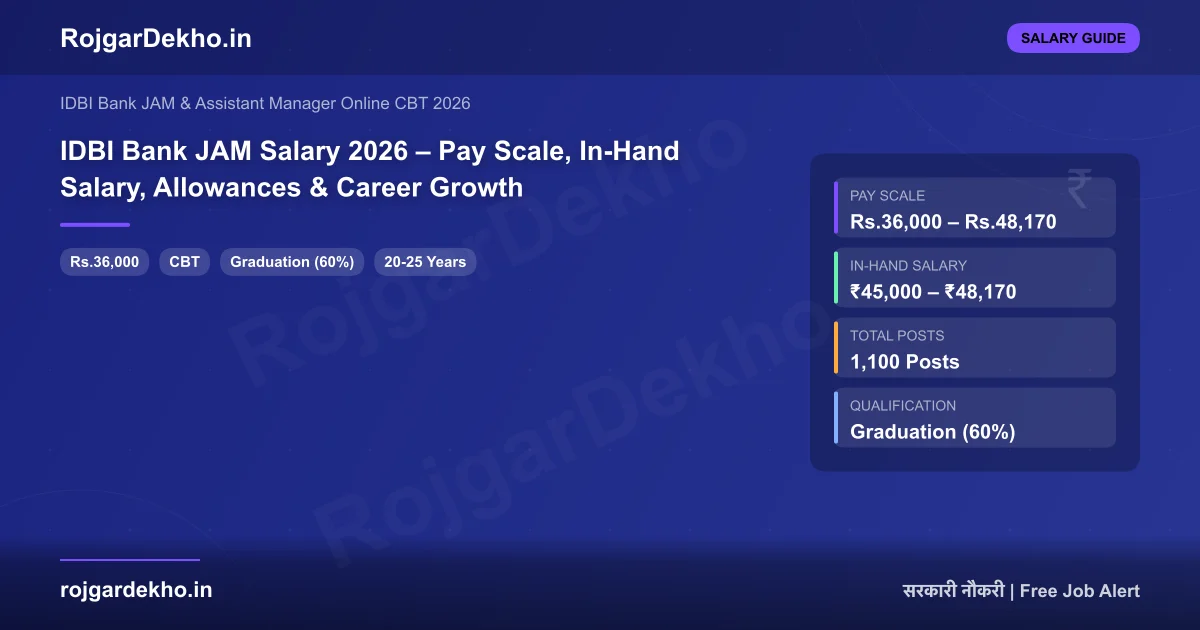
IDBI Bank JAM का प्रारंभिक वेतन लगभग ₹23,700 (बेसिक) होता है जिसमें DA, HRA और अन्य भत्ते जोड़ने पर ग्रॉस ₹32,000–₹36,000 प्रति माह बनता है। हालांकि, सटीक आंकड़ों के लिए आधिकारिक IDBI Bank भर्ती अधिसूचना देखें।
प्र: IDBI JAM के बाद करियर ग्रोथ कैसी होती है?
JAM (Junior Assistant Manager) से शुरुआत के बाद नियमित प्रदर्शन मूल्यांकन के आधार पर Assistant Manager → Deputy Manager → Manager → Senior Manager तक पदोन्नति होती है। IDBI Bank की IBA-sanctioned pay scales के तहत हर 3 वर्ष में increment और पदोन्नति की संभावना होती है।
IDBI JAM — तर्कशक्ति की विस्तृत तैयारी
IDBI JAM में तर्कशक्ति सेक्शन 60 प्रश्नों का है और यह सबसे अधिक भार वाला है। Seating Arrangement, Puzzles, और Inequalities — ये तीन मिलकर 30–35 प्रश्न बनाते हैं।
Seating Arrangement — रणनीति
रैखिक व्यवस्था (Linear): उत्तर/दक्षिण दिशा सुनिश्चित करें। "बाएं" और "दाएं" दिशा उत्तर की ओर मुँह करने पर अलग होती है।
वृत्तीय व्यवस्था (Circular): सबसे पहले निश्चित (fixed) व्यक्ति बैठाएं, फिर शर्तों के अनुसार बाकी। घड़ी की दिशा = क्लॉकवाइज।
द्वि-पंक्ति (Double Row): दो समूहों का आमना-सामना। "सामने वाला" संबंध स्पष्ट करें।
Puzzles — त्वरित हल की तकनीक
Puzzle प्रश्नों में पहले सभी दी गई जानकारी एक टेबल/ग्रिड में लिखें। निश्चित जानकारी (जो directly दी गई हो) पहले भरें। अनिश्चित जानकारी के लिए एलिमिनेशन मेथड अपनाएं।
IDBI Bank का इतिहास और वर्तमान स्थिति
| वर्ष | महत्वपूर्ण घटना |
|---|
| 1964 | IDBI की स्थापना — Industrial Development Bank of India Act |
| 2004 | IDBI को विकास वित्तीय संस्था से वाणिज्यिक बैंक में परिवर्तित |
| 2019 | LIC ने IDBI Bank में 51% हिस्सेदारी खरीदी — LIC का नियंत्रण |
| 2021 | सरकार ने IDBI Bank के विनिवेश का निर्णय (Strategic Disinvestment) |
| वर्तमान | LIC सबसे बड़ी शेयरधारक; आधिकारिक स्रोत से वर्तमान स्थिति जांचें |
अंग्रेजी भाषा — IDBI JAM के लिए विशेष तैयारी
IDBI JAM में अंग्रेजी का 40 प्रश्नों का सेक्शन 90वें पर्सेंटाइल और 80वें पर्सेंटाइल का अंतर है। Reading Comprehension (RC) में 10–12 प्रश्न होते हैं — इन्हें सटीक रूप से हल करें।
| अंग्रेजी विषय | IDBI JAM में महत्व | तैयारी टिप |
|---|
| Reading Comprehension | बहुत अधिक (10–12 प्रश्न) | RC पहले पढ़ें, फिर प्रश्न — विपरीत क्रम से समय बर्बाद होता है |
| Error Spotting | अधिक (8–10 प्रश्न) | Subject-Verb Agreement और Tense — सबसे आम गलतियाँ |
| Fill in the Blanks | मध्यम (5–7 प्रश्न) | Context से शब्द चुनें |
| Para Jumble | मध्यम (5–6 प्रश्न) | पहले और अंतिम वाक्य पहचानें |
| Vocabulary | मध्यम (4–5 प्रश्न) | Synonyms/Antonyms — दैनिक 10 शब्द सीखें |
| Cloze Test | अधिक (7–8 प्रश्न) | पूरा passage पहले पढ़ें, context समझें |
IDBI JAM अंतिम टिप: JAM परीक्षा में sectional cut-off होती है। किसी भी सेक्शन में अत्यधिक कम स्कोर करने पर बाहर हो सकते हैं चाहे overall अच्छा हो। चारों सेक्शन में संतुलित प्रदर्शन सुनिश्चित करें।
IDBI JAM — चयन प्रक्रिया पूर्ण विवरण
| चरण | विवरण | अंक |
|---|
| ऑनलाइन परीक्षा | Reasoning+CS (60) + English (40) + Quant (60) + Banking+GA (40) | 200 |
| दस्तावेज सत्यापन | शैक्षिक प्रमाण पत्र, आयु प्रमाण, जाति प्रमाण (यदि लागू) | Qualifying |
| Medical Examination | शारीरिक स्वास्थ्य परीक्षण | Qualifying |
| अंतिम नियुक्ति | ऑनलाइन परीक्षा की मेरिट के आधार पर | — |
IDBI JAM — संख्यात्मक योग्यता की गहन तैयारी
IDBI JAM में संख्यात्मक योग्यता सेक्शन (60 प्रश्न) में डेटा इंटरप्रिटेशन (DI) और Arithmetic दोनों शामिल हैं। DI से 15–20 प्रश्न आते हैं — ये सेट-आधारित होते हैं।
Data Interpretation — त्वरित तकनीक
पाई चार्ट: कुल को 100% मानें। प्रतिशत को मूल संख्या में बदलने का अभ्यास करें।
बार ग्राफ: सटीक पढ़ना और % बदलाव की गणना — (नया-पुराना)/पुराना × 100।
टेबल DI: सबसे आम। पहले पूरी टेबल देखें, फिर प्रश्न पढ़ें।
Line Graph: Trend देखें — बढ़ रहा है, घट रहा है, या स्थिर।
| DI प्रकार | IDBI में फ्रीक्वेंसी | हल की गति |
|---|
| Table DI | बहुत अधिक | सबसे तेज — सीधे डेटा |
| Bar Graph | अधिक | तेज — visual reading |
| Pie Chart | मध्यम | मध्यम — % conversion जरूरी |
| Line Graph | मध्यम | तेज — trend based |
| Mixed DI | अधिक (कठिन) | धीमा — दो-तीन chart मिले होते हैं |
Time & Work — शॉर्टकट
यदि A, काम को x दिन में और B, y दिन में करता है, तो दोनों मिलकर: xy/(x+y) दिन में करेंगे।
उदाहरण: A 12 दिन, B 18 दिन → मिलकर 12×18/(12+18) = 216/30 = 7.2 दिन।
Mixture और Alligation — एक आसान तरीका
Alligation नियम: यदि दो मिश्रणों के मूल्य C₁ और C₂ हैं और अपेक्षित मूल्य M है, तो अनुपात = (C₂-M):(M-C₁)।
बैंकिंग परीक्षाओं में यह Profit & Loss और Interest Rate समस्याओं में भी आता है।
IDBI JAM में समय प्रबंधन — पूरा 160 मिनट का प्लान
| सेक्शन | प्रश्न | समय आवंटन | अनुशंसित क्रम |
|---|
| Banking+GA (40) | 35 मिनट | 1st | सुबह ताजा दिमाग से — GK fastest |
| English (40) | 35 मिनट | 2nd | Grammar तेज, RC ध्यान से |
| Reasoning+CS (60) | 45 मिनट | 3rd | Inequalities पहले, Puzzles बाद |
| Quantitative (60) | 45 मिनट | 4th | Simplification+DI पहले, Word Problems बाद |
IDBI JAM की सबसे बड़ी गलती: Quantitative section को पहले हल करने की कोशिश — लंबी गणनाएं थका देती हैं। GK और English से शुरू करें, Quant अंत में। इससे आप ताजे दिमाग से शुरू करते हैं और अंक ज्यादा आते हैं।
IDBI Bank JAM परीक्षा में सफलता के लिए नियमित अभ्यास और सही रणनीति दोनों जरूरी हैं। प्रतिदिन कम से कम 2–3 घंटे का समर्पित अभ्यास करें। कमजोर विषयों पर अधिक समय दें और मजबूत विषयों में गति बनाए रखें। मॉक टेस्ट के बाद गलतियों का विश्लेषण सबसे महत्वपूर्ण कदम है — बिना विश्लेषण के अभ्यास का पूरा लाभ नहीं मिलता।