UPPSC LT Grade Teacher Salary 2026 – Complete In-hand Pay, HRA, Allowances & 30-Year Career Value
When candidates ask "kitna milega?" — they deserve a complete, honest answer. This article breaks down the UPPSC LT Grade Assistant Teacher salary in 2026 — not just the basic pay on paper, but what actually lands in your bank account each month, how it grows over 30 years, and how it compares to what private schools pay. If you are serious about this recruitment, this is important reading.
Apply now (last dates 20–24 April 2026): UPPSC LT Grade Assistant Teacher Mains Online Form 2026.
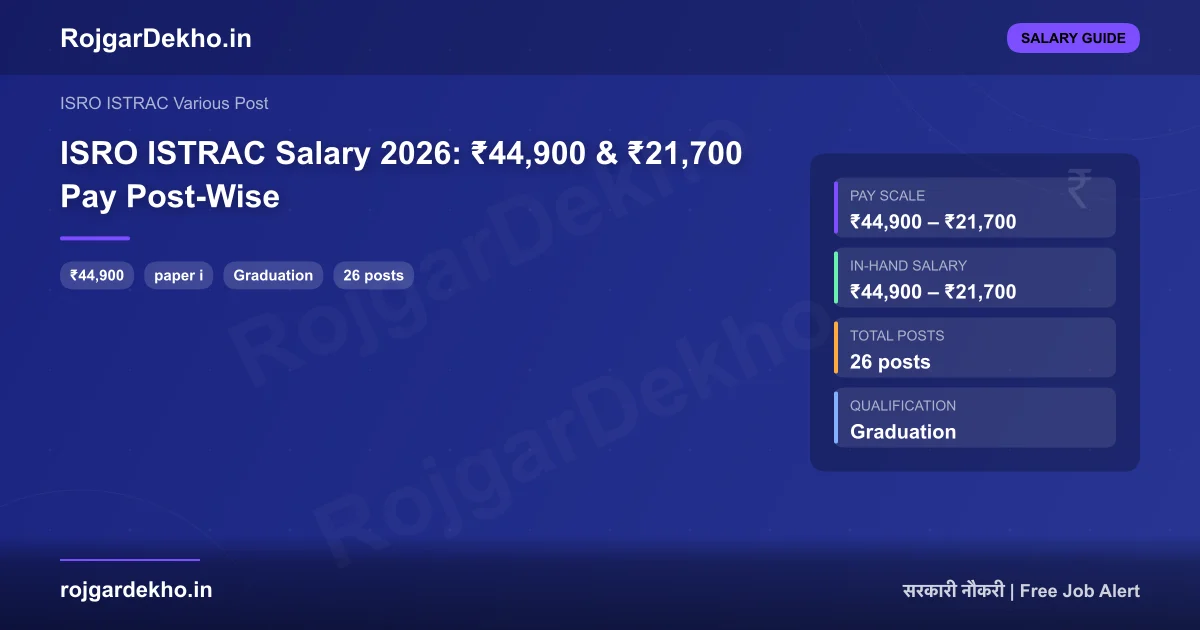
Pay Scale – Pay Level 7
UPPSC LT Grade Assistant Teachers are placed in Pay Level 7 of the 7th Pay Commission pay matrix:
- Basic Pay: Rs. 44,900 (entry level)
- Pay Level: Level 7 (Rs. 44,900 – Rs. 1,42,400)
- Pay Band: PB-2 (Rs. 9,300–34,800) + Grade Pay 4,600 (6th CPC, now replaced by Level 7)
The basic pay of Rs. 44,900 is just the starting point. Your actual take-home is significantly higher once allowances are added.
In-hand Salary Calculation
Here is what an LT Grade Teacher actually receives monthly, depending on their posting location:
Lucknow / X-Category City
- Basic Pay: Rs. 44,900
- DA @ 46% (current rate as of April 2026): Rs. 20,654
- HRA @ 27% (X-category city): Rs. 12,123
- TA (Transport Allowance): Rs. 3,600
- Gross Salary: ~Rs. 81,277
- Deductions (NPS ~10% of Basic+DA, Income Tax, etc.): ~Rs. 16,000–18,000
- Net In-hand: Rs. 63,000–65,000 approximately
Small District / Y-Category City
- Basic Pay: Rs. 44,900
- DA @ 46%: Rs. 20,654
- HRA @ 18% (Y-category): Rs. 8,082
- TA: Rs. 1,800
- Gross Salary: ~Rs. 75,436
- Deductions: ~Rs. 14,000–16,000
- Net In-hand: Rs. 59,000–61,000 approximately
Rural Area / Z-Category
- HRA @ 9%: Rs. 4,041
- Net In-hand: Rs. 52,000–54,000 approximately
Note: DA rates are revised every 6 months (January and July). As DA increases, your in-hand salary automatically grows without any promotion needed.
Understanding DA (Dearness Allowance)
DA is linked to the All India Consumer Price Index (AICPI). Currently at 46% of basic pay, DA was 17% in 2017 when the 7th CPC was implemented. Every time DA increases by 1%, a Level 7 employee gets Rs. 449 extra per month. Over a career, DA additions add lakhs to cumulative earnings.
HRA – City-wise Breakdown
- X-Category (Lucknow, Kanpur, Agra, Varanasi): 27% of Basic = Rs. 12,123/month
- Y-Category (District HQs with population 5–50 lakh): 18% of Basic = Rs. 8,082/month
- Z-Category (Rural/Small towns): 9% of Basic = Rs. 4,041/month
If you get posted in Lucknow vs a rural area, the HRA difference alone is Rs. 8,082/month — that is nearly Rs. 97,000 per year. This is why city posting preferences matter.
Summer & Winter Vacation Benefit
This is a benefit that private sector employees rarely get and is often overlooked in salary comparisons:
- Government school teachers get approximately 65–70 paid vacation days per year — summer vacations (May–June, ~45 days) and winter vacations (~20 days).
- You receive full salary during vacations.
- No leave deductions, no "work from home" during vacations.
- This effectively means you earn your salary for ~295 working days but enjoy pay for 365 days.
NPS Pension – Your Retirement Security
UPPSC LT Grade Teachers appointed after January 2004 come under the National Pension System (NPS):
- Employee contribution: 10% of (Basic + DA) per month
- Government contribution: 14% of (Basic + DA) per month
- At entry: ~Rs. 6,000/month employee + ~Rs. 9,200/month government = Rs. 15,200 total into NPS every month
- After 30 years with 8% average return: NPS corpus can reach Rs. 1.5–2 crore+
- At retirement: You can withdraw 60% as lump sum (tax-free up to 60%) and use 40% to buy annuity for monthly pension.
- Estimated monthly pension from annuity: Rs. 25,000–40,000 depending on corpus.
Promotion Path – Teacher to DEO
This is the career ladder for an LT Grade Teacher in Uttar Pradesh:
- LT Grade Assistant Teacher (Pay Level 7, Rs. 44,900) → Entry point
- Senior Teacher / Head Teacher (Level 8, Rs. 47,600) → After 4–5 years with DPC clearance
- Trained Graduate Teacher (TGT equivalent posting) → Through departmental promotion
- Principal / Headmaster of Secondary School (Level 10, Rs. 56,100) → After 8–12 years
- Block Education Officer (BEO) → Through UPPSC exam or promotion
- District Education Officer (DEO) (Gazetted Post, Level 12+) → Senior administrative role
Every promotion brings an increment in Pay Level, significantly increasing your basic pay and all allowances calculated as percentage of basic.
Annual Increment
Every year on July 1st, government employees receive a 3% annual increment on their basic pay:
- Year 1: Rs. 44,900 basic
- Year 2: Rs. 46,300 basic (+Rs. 1,400/month)
- Year 5: ~Rs. 52,000 basic
- Year 10: ~Rs. 60,000 basic
Plus DA revisions every 6 months. By the time you have 10 years of service, your in-hand salary crosses Rs. 80,000–90,000 even without promotion.
30-Year Career Value – The Real Number
When people compare government vs private salaries, they look only at the starting salary. Let us look at cumulative value over 30 years:
- Estimated lifetime gross salary (30 years, assuming moderate increments and DA): Rs. 3–4 crore
- NPS Corpus at retirement: Rs. 1.5–2 crore
- Gratuity: ~Rs. 20 lakh
- Leave Encashment at retirement: Rs. 5–10 lakh
- Total career value: Rs. 5–6 crore+
- Plus job security, pension, medical benefits — non-quantifiable but enormously valuable
Comparison with Private School Salary
The contrast with private schools is stark:
- Private School (unrecognized/small): Rs. 8,000–12,000/month. No PF, no pension, no job security, no paid vacations.
- Private School (recognized, reputed): Rs. 15,000–25,000/month. Some schools offer better pay, but rarely match government benefits.
- CBSE/ICSE private school: Rs. 25,000–45,000 starting. Better than most, but still no NPS, no DA revision, no guaranteed promotion.
- LT Grade Government Teacher: Rs. 52,000–65,000 in-hand + NPS + annual increment + DA revision + paid vacations + job security for 30 years.
The break-even point where a private teacher starts earning more than a government teacher (considering NPS, DA, increments, and vacations) is essentially never, unless they are in an IB/International school or corporate training role.
Apply for this opportunity here: UPPSC LT Grade Mains Online Form 2026.
Frequently Asked Questions (FAQ)
Starting salary kitni hai ek LT Grade Teacher ki?
UPPSC LT Grade Assistant Teacher ki entry-level basic pay Rs. 44,900 (Pay Level 7) hai. In-hand salary location ke hisaab se Rs. 52,000 se Rs. 65,000 ke beech hoti hai — rural areas mein Rs. 52,000 aur Lucknow jaise X-category city mein Rs. 63,000–65,000 tak.
Lucknow mein posting ho to kitna milega?
Lucknow (X-category city) mein posting hone par HRA 27% milta hai, jo Rs. 12,123/month hota hai. Gross salary around Rs. 81,000 aur net in-hand approximately Rs. 63,000–65,000 per month hogi (current DA rate par).
Promotion kab milta hai aur kitni salary increase hoti hai?
DPC (Departmental Promotion Committee) ke through 4–5 saal ke service mein promotion milta hai. Pehla promotion Level 7 se Level 8 mein hota hai — basic Rs. 44,900 se Rs. 47,600. Phir Principal Level tak pahunchne mein 8–12 saal lagte hain jahan basic Rs. 56,100 tak pahunchti hai. Plus DA aur HRA bhi usi hisaab se badhti hai.
Private school se kitna zyada milega government mein?
Zyada tar private schools (especially small/unrecognized) Rs. 8,000–20,000 deti hain. Acha private school bhi Rs. 25,000–40,000 deta hai. Government LT Grade Teacher ko starting mein hi Rs. 52,000–65,000 in-hand milta hai — plus NPS, DA revision har 6 mahine, paid vacations (65–70 din/saal), aur 30-saal ki job security. Kisi bhi angle se government job behtar hai.
Pension milti hai LT Grade Teacher ko?
Haan, NPS (National Pension System) ke through. Employee 10% deta hai aur government 14% contribute karti hai. 30 saal ki service ke baad estimated NPS corpus Rs. 1.5–2 crore+ ban sakta hai, jisse Rs. 25,000–40,000/month ki pension milne ka estimate hai.
Full Gross Salary Calculation — What Actually Hits Your Account
Everyone talks about "Pay Level 7" but nobody breaks down what you actually take home. Let us do the math properly so you can plan your finances.
| Component | Basis | Amount (Approximate) |
|---|---|---|
| Basic Pay | 7th Pay Commission, Level 7, Cell 1 | ₹44,900/month |
| Dearness Allowance (DA) | Currently ~50% of Basic | ₹22,450/month |
| House Rent Allowance (HRA) | Varies by city (see below) | ₹3,592 – ₹10,776/month |
| Medical Allowance | Fixed per month | ₹1,000/month |
| Children Education Allowance | Per child (max 2 children) | ₹2,250/child/month |
| Other Allowances | Conveyance, misc. | ₹500 – ₹1,000/month |
| GROSS TOTAL | ~₹72,000 – ₹82,000/month | |
| Less: NPS Contribution | 10% of Basic + DA (employee share) | -₹6,735/month |
| Less: Income Tax (TDS) | Depends on regime and investments | -₹2,000 – ₹6,000/month |
| NET IN-HAND (approx.) | ~₹63,000 – ₹70,000/month |
Note: DA is revised twice a year (January and July). The above figures reflect approximately 50% DA. As DA increases, both your gross and the NPS deduction go up — but net in-hand rises significantly over time.
City-wise HRA Breakdown
HRA depends on which city your school is located in. UPPSC uses three categories:
| City Category | Cities / Areas | HRA Rate | Monthly HRA (on ₹44,900 basic) |
|---|---|---|---|
| X Category (Metro) | Lucknow, Kanpur (Metro status) | 24% of Basic | ₹10,776/month |
| Y Category | Agra, Varanasi, Allahabad (Prayagraj), Meerut, Ghaziabad, Bareilly | 16% of Basic | ₹7,184/month |
| Z Category (Remaining districts) | All other UP districts (rural/semi-urban postings) | 8% of Basic | ₹3,592/month |
If you live in Lucknow and teach in a district town nearby (transferred posting), HRA is calculated based on the city where your school is located, not where you live. This is important — many teachers get posted in Z category districts and travel from Y category cities. They receive only ₹3,592 HRA even if their rent is higher. Transfer policy in UP government schools can affect your take-home significantly.
DA Revision History and Its Impact on Your Salary
Dearness Allowance (DA) is revised twice a year and has a dramatic compound effect on salary over a career:
| Year | DA % | Key Event |
|---|---|---|
| 2021 (Jan) | 28% | Restored after COVID freeze |
| 2022 (Jul) | 38% | Sharp increase post-freeze recovery |
| 2023 (Jan) | 42% | Normal revision |
| 2023 (Jul) | 46% | Inflation-linked increase |
| 2024 (Jan) | 50% | Crossed 50% mark — historically significant |
| 2024 (Jul) | 53% | Further rise |
| 2025 onward | Expected 56-58%+ | 8th Pay Commission in discussion |
When DA crosses 50%, many allowances get automatically revised (like HRA thresholds). The upcoming 8th Pay Commission (expected 2026 implementation) will cause another significant jump in both basic pay and allowances. If you join now at ₹44,900 basic, your effective salary after 8th Pay Commission could be in the ₹70,000-80,000 basic range, potentially pushing gross salary to ₹1.2 lakh+.
30-Year Career Earnings Projection
This is a realistic projection for an LT Grade teacher joining at age 25 in 2026, retiring at 60. Annual increments of 3% (one increment per year) plus periodic DA revisions and Pay Commission revisions are factored in:
| Career Stage | Year | Approx. Basic Pay | Approx. Gross (with DA/HRA) |
|---|---|---|---|
| Joining | 2026 | ₹44,900 | ₹72,000 – ₹80,000 |
| 5 years in | 2031 | ₹52,000 – ₹55,000 | ₹90,000 – ₹1,00,000 |
| 10 years (Post-8th Pay Commission) | 2036 | ₹70,000 – ₹80,000 | ₹1,20,000 – ₹1,40,000 |
| 20 years (Senior Teacher) | 2046 | ₹90,000 – ₹1,05,000 | ₹1,60,000 – ₹1,90,000 |
| 30 years (Pre-retirement) | 2056 | ₹1,10,000 – ₹1,30,000 | ₹2,00,000 – ₹2,40,000 |
This is before promotion increments. If you get promoted to Lecturer/PGT level through UPPSC PCS or promotion, the jump is even larger. The pension (through NPS) also accumulates — with 10% employee + 14% government contribution, your NPS corpus after 30 years can be substantial (₹1.5-2 crore range, depending on returns).
Benefits Beyond Salary
Summer and Winter Vacation — Paid Leave
UP government teachers get approximately 60 days of summer vacation (May-June) and 15-20 days of winter vacation (December-January) — fully paid. This is a benefit private sector employees simply do not have. Calculated annually, this is effectively 2+ months of salary for zero work — or rather, time for personal development, travel, family, or even side income through tuition. Over a 30-year career, this is roughly 5 years of extra paid time.
Medical Reimbursement
Government teachers are covered under the UP State Medical Reimbursement scheme. For self and family members (spouse, dependent children, dependent parents), hospitalization expenses in government hospitals are free. For private hospitals (empanelled), expenses are reimbursable up to specified limits. The ₹1,000/month medical allowance is for routine outpatient expenses. For major illnesses requiring surgery or long hospitalization, reimbursement claims can go up to several lakhs.
Children Education Allowance
₹2,250 per child per month — for a maximum of 2 children. This is available till the child completes Class 12. If you have 2 children, that is ₹4,500/month = ₹54,000/year extra, tax-free. Over 15 years of schooling per child, this adds up to ₹8,10,000 per child. Many teachers do not fully leverage this — make sure you submit the annual certification to your drawing officer on time.
Government Quarters (GPF vs HRA)
In some postings, especially in smaller towns, government accommodation (quarters) may be available. If you take government quarters, HRA is not paid. Whether to take quarters or HRA depends on the quality of available accommodation and your rent in that town. In district headquarters, quarters are often outdated but rent-equivalent savings can be significant. In your first posting, evaluate this carefully before deciding.
LT Grade vs Private School — Honest Comparison
| Factor | UPPSC LT Grade Teacher | Private School Teacher (UP) |
|---|---|---|
| Starting Salary | ₹63,000 – ₹70,000 (in-hand) | ₹12,000 – ₹25,000/month |
| Job Security | Permanent (cannot be arbitrarily removed) | Contract-based, can be terminated |
| Vacation (Paid) | ~75-80 days/year (summer + winter) | 15-30 days/year |
| Pension | NPS (government contributes 14%) | Usually none (PF sometimes) |
| Medical | Government reimbursement scheme | Usually none or ESIC (limited) |
| Children Education Allowance | ₹2,250/child/month | None |
| Promotion | Defined seniority + UPPSC promotion channels | Discretionary (owner decides) |
| Work Pressure | Government school workload (manageable) | High — parents, management pressure |
| Career Peak Salary | ₹2,00,000+ gross near retirement | ₹40,000 – ₹60,000 maximum (most schools) |
The financial gap is stark. A private school teacher earning ₹20,000/month takes 35+ years to match the starting salary of an LT Grade teacher. That is not a small difference — that is a completely different standard of living. And that is before accounting for pension, medical, and vacation benefits.
Frequently Asked Questions
LT Grade teacher ki first posting kahan hoti hai?
First posting generally aapke home district ke bahar hoti hai — UP government ka policy hai ki first posting dusre district mein karo (usually rural/semi-urban area). 3-5 saal ki service ke baad mutual transfer ya compassionate transfer ke liye apply kar sakte hain. Patience rakhein — yeh temporary hai.
LT Grade me promotion kaise milti hai?
Promotion ka rasta do tarah se hai: (1) Departmental promotion — seniority based, Lecturer grade mein jaate hain after 8-10 years typically. (2) UPPSC PCS exam — agar aap PCS qualify karte hain to BEO, DEO, ya higher administrative roles mein ja sakte hain. Many LT Grade teachers eventually crack PCS — teaching ki naukri ke saath taiyari ka time milta hai.
NPS aur old pension mein kya fark hai?
Old Pension Scheme (OPS) mein retirement par last salary ka 50% guaranteed pension milti thi — government ke paas paisa ho ya na ho. NPS mein aap 10% + government 14% invest karte hain equity/debt funds mein. Returns market-linked hain — typically 8-10% long-term. 30 saal ki service ke baad NPS corpus ₹1.5-2 crore tak ho sakta hai, jisse ₹50,000 – ₹80,000/month annuity possible hai. Risk zyada hai OPS se, lekin long-term corpus bhi zyada hai. Currently UP mein NPS hi applicable hai new joiners ke liye.