State Police vs Central Police — Which Is Better 2026
When you are preparing for a police constable or sub-inspector post, you often face a fork in the road: apply for your state police (UP Police, MP Police, Bihar Police, Rajasthan Police) or go for a Central Armed Police Force (BSF, CRPF, CISF, ITBP, SSB)? Both lead to a uniform, a government salary, and a government pension. But they offer very different lives — different work, different postings, different risks, and different relationships with family. This guide gives you the honest comparison that most recruitment portals avoid giving you.
The short answer: neither is universally "better." The right answer depends entirely on whether you want to stay near your home area or are comfortable with pan-India deployment. Every other consideration — pay, risk, career advancement — is secondary to this fundamental lifestyle question.
The Basic Setup — Who Recruits What Ranks?
State Police recruits Constable GD, Head Constable, and Sub Inspector through state-level exams — UP Police Bharti Board, MP Police, Bihar Police (CSBC), Rajasthan Police, etc. Each state runs its own examination and selection process. Posting is exclusively within that state.
Central Armed Police Forces (CAPFs) recruit through SSC CPO for SI posts in BSF, CRPF, CISF, ITBP, and SSB, and through SSC GD Constable exam for constable positions. These forces operate nationally — a CRPF constable from Bihar may serve in Jammu, then Chhattisgarh, then Assam. CAPFs include: BSF (guarding land borders), CRPF (internal security, riot control, anti-Naxal, Kashmir), CISF (industrial security at airports, nuclear plants, PSUs), ITBP (Indo-Tibetan border, high-altitude terrain), and SSB (India-Nepal and India-Bhutan borders).
Salary Comparison — Nearly Identical at Entry
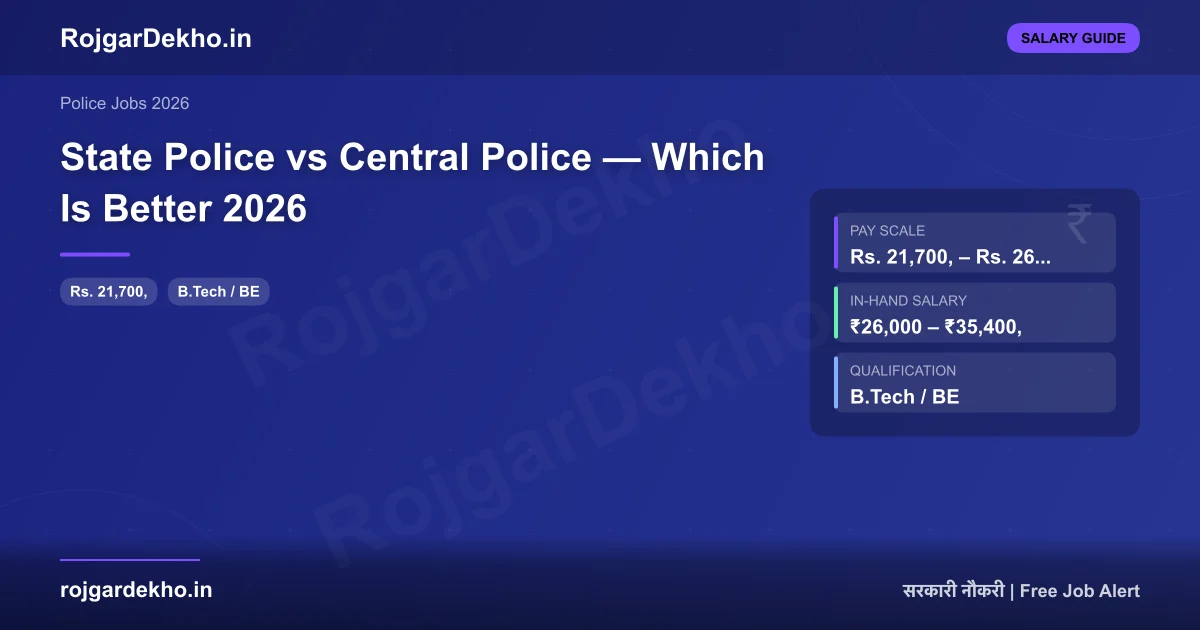
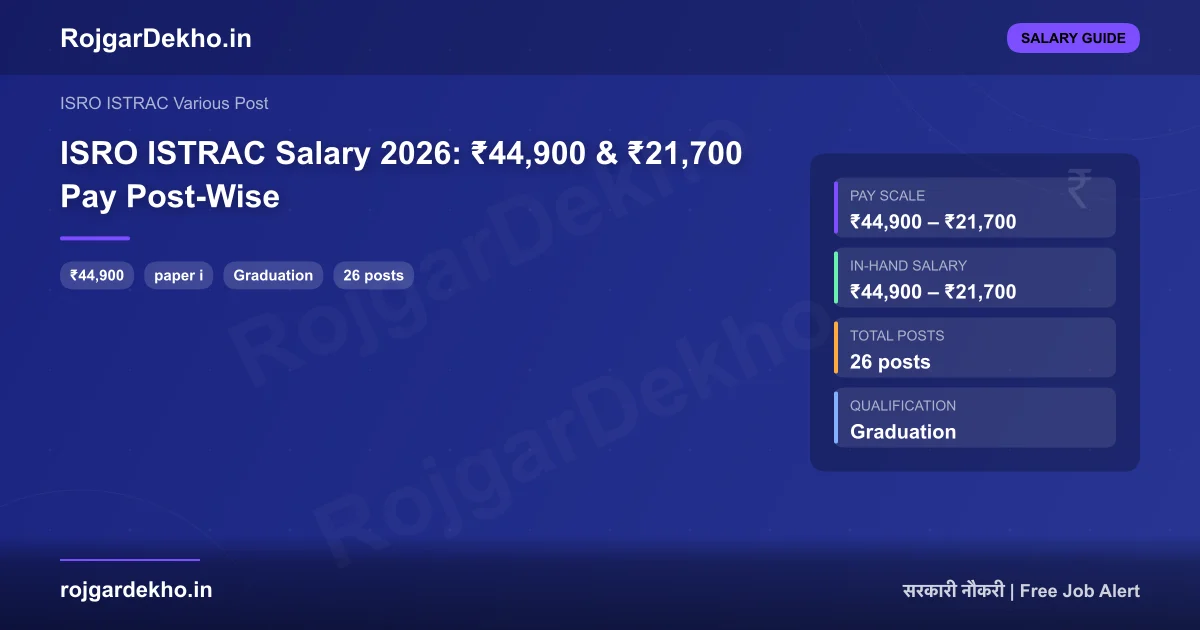
At the constable level, salary is almost identical. Both State Constable and CAPF Constable GD sit at Level 3 of the 7th Pay Commission matrix: basic Rs. 21,700, in-hand approximately Rs. 26,000–32,000 with DA and HRA. At SI level, both are Level 6: basic Rs. 35,400, in-hand approximately Rs. 48,000–55,000. The salary difference is marginal.
| Parameter | State Police | Central Police (CAPFs) |
|---|---|---|
| Constable Basic Pay | Level 3 — Rs. 21,700 | Level 3 — Rs. 21,700 |
| Constable In-Hand | Rs. 26,000–32,000 | Rs. 28,000–34,000 (slightly higher due to posting allowances) |
| SI Basic Pay | Level 6 — Rs. 35,400 | Level 6 — Rs. 35,400 |
| SI In-Hand | Rs. 48,000–55,000 | Rs. 50,000–58,000 |
| Risk / Hardship Allowance | Extra in Naxal/conflict areas | Border and counter-insurgency allowances apply |
| CSD Canteen Access | Limited in most states | Full CSD canteen access — saves Rs. 3,000–5,000/month |
| Free Accommodation | Police Lines quarters in many areas | Barracks / official quarters — mandatory |
| Family Quarters | At district HQ or town | At peace station only — border/operational area has no family quarters |
| Uniform and Equipment | State provides | Central provides — often better quality |
The CSD canteen benefit deserves special mention. CAPF personnel have access to Central Government Canteen (CSD) stores where goods — groceries, electronics, appliances, vehicles — are available at 15–30% below market price. Over a month, this can translate to Rs. 3,000–5,000 in savings for a family that actively uses the canteen. State police personnel typically do not have equivalent access. This is a meaningful quality-of-life financial benefit that is frequently underestimated.
Posting — The Biggest Real-Life Difference
This is where careers and lives genuinely diverge. For state police, you are posted within your state. Many states make an effort to post within or near your home district for constables, though transfers occur every 2–3 years. For an MP Police constable, a home-district posting request in non-sensitive areas is regularly accommodated over time. The realistic scenario: you live near your family, your children attend local schools, and your elderly parents can be visited on weekends.
For Central Police, you have zero control over geography. A BSF constable from Rajasthan may spend 3 years on the Rajasthan-Pakistan border, then be transferred to the West Bengal-Bangladesh border, then to Tripura. CRPF deployments historically include Kashmir (high operational tempo, genuine physical risk), Red Corridor states like Chhattisgarh and Jharkhand (Naxal operations), and North-East states. CISF posts are at industrial establishments scattered across India — airports in Delhi, Mumbai, Chennai, nuclear plants in remote locations. ITBP operates exclusively at high altitude in Ladakh, Uttarakhand, Himachal, Sikkim, and Arunachal.
If you have a spouse with a fixed local job, school-age children, or elderly parents who need regular care — the central forces posting reality is genuinely difficult for family life. This is not a small consideration. Many CAPF personnel end up effectively separated from their families for 9–10 months of the year. Plan for this with clear eyes before choosing.
Work Nature — What Your Day Actually Looks Like
State Police constable: thana (police station) duty. You interact with the public daily — FIR registration, patrol, crime scene investigation assistance, court escort duty, VIP security bandobast, election duty. It is high-contact, often high-pressure work with direct accountability to the local community. You are visible in your area. You know the local geography, people, and dynamics. This familiarity is both an advantage (effectiveness) and a vulnerability (political pressure, local interference). In rural MP, a good local police constable is genuinely respected and influential.
Central Police work is camp-based or border/facility-based. BSF conducts border fence patrol on fixed schedules — largely physical endurance, minimal civilian interaction, highly disciplined routine. CRPF does riot control, anti-Naxal operations, election duty across different states — episodically intense and occasionally life-threatening, with long stretches of routine camp duty in between. CISF provides security at fixed facilities — shift-based, structured, relatively predictable. SSB monitors the India-Nepal and India-Bhutan border. ITBP patrols high-altitude terrain near the China border. None of these involve the daily civilian community interaction of a state police thana.
Risk Profile by Force
Risk varies dramatically by posting rather than by force category alone. A state police constable in peaceful Himachal Pradesh has an extremely low-risk duty profile. A CRPF constable in a Naxal-affected district of Bastar or a BSF soldier on the India-Pakistan border faces genuine daily physical risk. Nationally, CRPF and BSF have historically had the highest casualty figures among uniformed forces in peacetime. State police in Naxal-affected districts (Sukma, Dantewada, parts of Jharkhand) is equally dangerous. "Central forces are safer" and "state police is safer" are both oversimplifications. Your risk is primarily determined by where you are posted, not which force you join.
Career Advancement — State vs Central
In both systems, promotion from Constable to Head Constable typically takes 8–12 years. However, the mechanisms differ. State police promotions are often DPC-based (seniority-driven) and can be subject to legal stays and political dynamics — UP Police faced multi-year promotion delays due to court-ordered stays in the 2010s. CAPF promotions follow a more standardised, merit-and-seniority combined process at the central level, somewhat insulated from state-level political influence. State police offers LDCE (Limited Departmental Competitive Exam) in many states, allowing Head Constables to become SI directly — a faster track than most CAPFs offer for equivalent promotions.
Leave Policy — State vs Central Police
Leave availability is a meaningful quality-of-life consideration that is rarely discussed in comparison articles. State police: casual leave (8–10 days annually), earned leave (30 days), medical leave as required. However, getting leave approved — especially during election duty, festival season, or when crime rates spike — can be difficult at the constable and HC level. Local political dynamics can make leave approval unpredictable. Central forces: CAPFs have a more structured leave policy under central government rules. Earned leave (30 days), casual leave, and leave encashment provisions are clearly defined and generally applied uniformly. Border deployment phases may restrict leave for 3–6 months at a stretch, but at peace stations leave approval is typically more straightforward than state police thana duty.
Medical and Health Benefits
State police personnel are typically covered under state government health schemes (MPGHS in MP, CGHS equivalent in other states). Central force personnel are covered under CGHS (Central Government Health Scheme), which has a broader empanelled hospital network across India — an advantage if you are posted far from your home state and need tertiary care. State police health coverage is generally better for home-area postings where you can use familiar empanelled hospitals. For central force personnel posted in remote areas — ITBP at high altitude, BSF at border outposts — medical facilities may be limited, and serious cases require evacuation. This health risk factor is an underappreciated aspect of certain CAPF postings.
Honest Verdict — Which Should You Choose?
Choose State Police if family proximity, home-area posting, and daily community engagement are priorities for you. The salary is essentially the same. You will build roots in one place, which is invaluable for family stability, children's education, and social relationships. The work is varied and community-connected. Political pressure exists but so does genuine daily satisfaction in serving your own locality.
Choose Central Police if you are comfortable with pan-India deployment, if the discipline and structure of a central force appeals to you more than local political dynamics, if CSD canteen savings are meaningful for your family budget, or if you specifically want border or internal security work rather than civilian law enforcement. The trade-off is years away from family in challenging terrain — be honest with yourself about whether you and your family can sustain this.
There is no right answer. Both are good careers. Both offer identical base pay, pension, and government benefits. The difference is in the life they create around the salary.
BSF CRPF CISF ITBP SSB Salary Comparison 2026
UP Police Constable Salary 2026 — In-Hand Calculation
FAQs
Is CRPF better than state police for a Bihar candidate?
It depends on priorities, not on any objective quality measure. CRPF offers slightly higher gross pay due to central allowances and full CSD canteen access. However, CRPF means near-certain postings far from Bihar — Kashmir, Chhattisgarh's Naxal belt, and the North-East are common CRPF deployment zones. Bihar Police constable will more likely be posted within Bihar, within reach of family. If family proximity is your top priority, Bihar Police is the better choice despite the marginally lower total pay. If adventure, national deployment, and disciplined force structure matter more, CRPF is the better fit.
Do CISF constables get better pay than state police?
At the basic pay level, both are Level 3 — identical. CISF constables receive special allowances for working at sensitive installations (airports, nuclear facilities, petroleum refineries) that can add Rs. 1,500–3,000 per month to gross pay. The more meaningful advantage is work nature: CISF duty is shift-based at fixed locations with predictable hours — no field operations, no riot control, no Naxal deployment. Many candidates specifically target CISF for this reason. The pay difference over state police is modest; the lifestyle difference is significant.
Can a state police constable join central police later?
Not through transfer. To join a central force, a state police constable must apply fresh through an open exam — SSC CPO for SI-level posts in CAPFs, SSC GD Constable for constable-level posts. There is a deputation mechanism at the Inspector and DSP levels where state officers can serve with CAPFs for 2–3 years, but this is at their discretion and available only to gazetted rank officers. At the constable level, fresh competitive examination is the only route to joining a different force.
Which police force has the best promotion opportunities?
This varies significantly by state and central force. CISF and SSB generally have better promotion-to-vacancy ratios than BSF or CRPF because their total cadre is smaller relative to promotional posts. In state police, it varies by state — Maharashtra Police and Karnataka Police historically have better promotion mechanisms than UP Police or Bihar Police where legal stays have delayed promotions for years. For candidates prioritising rapid promotion, CISF and SSB are commonly cited as better than CRPF or BSF, and smaller state forces often move faster than very large ones.
Do CAPF soldiers get pension at the same rate as state police?
Yes. All CAPF personnel and state police personnel appointed after January 2004 are covered under NPS at the same contribution rates — 10% employee, 14% employer. For those in service before 2004, OPS (Old Pension Scheme) with 50% of last basic pay applies. CAPF personnel killed in the line of duty receive ex-gratia payments and special family pension provisions that are often more generous than state police provisions — but these are extraordinary circumstances, not regular pension rules. For regular retirement pension, the structure is essentially the same across both categories.